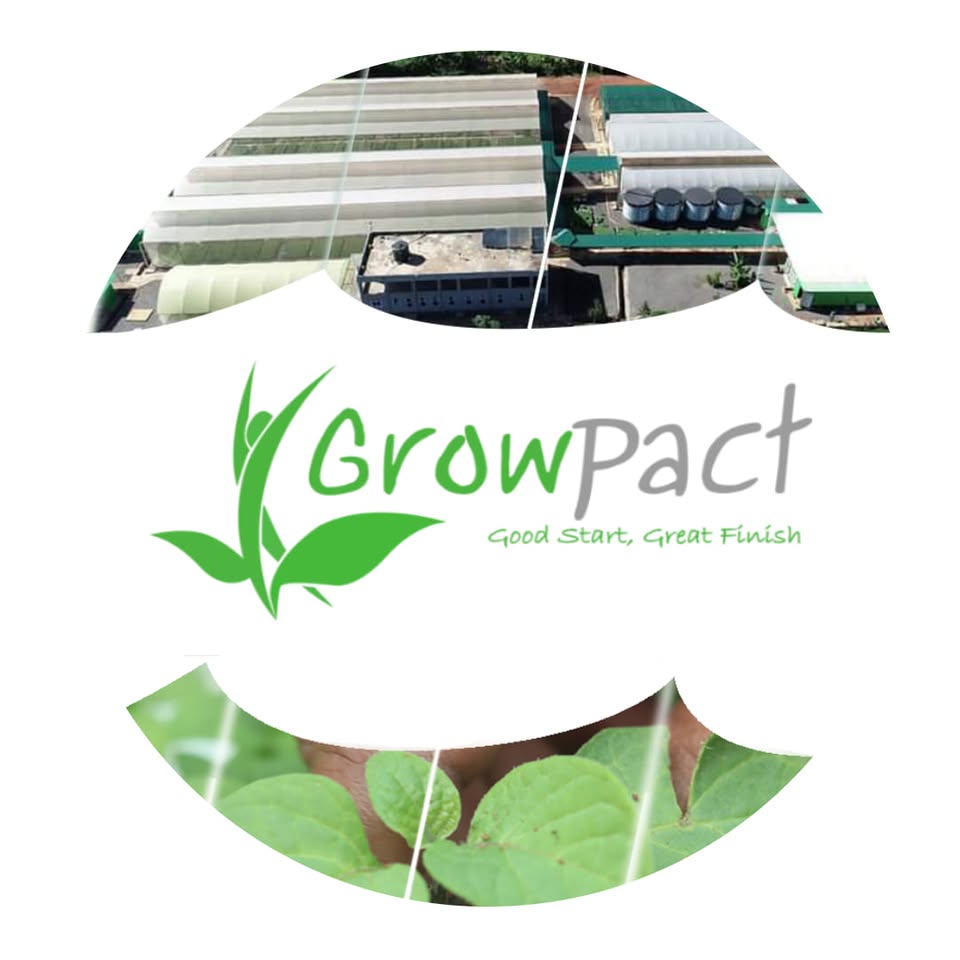
A Kenyan agritech firm credited with transforming smallholder farming in parts of the Rift Valley has been sold to Dutch investors, in a transaction that underscores both the promise and opacity of Africa’s impact investment space. GrowPact Kitale, founded in 2016, was acquired by a Dutch family office with longstanding ties to the company.
Thank you for reading this post, don't forget to subscribe!Truvalu, a global impact investment firm, confirmed it completed its strategic exit on January 21, 2026. Financial terms of the deal were not disclosed, leaving questions about valuation, returns, and the broader implications for local ownership unanswered.

From crisis to opportunity
GrowPact’s origins trace back to a financial setback. Founders Maicy and Joshua Mugendi reportedly lost their savings after a delivery contract collapsed, forcing them to rethink their business model.
Instead of exiting agriculture, the pair identified a structural weakness in Kenyan farming: the lack of reliable, professional-grade seedlings. That gap became the foundation of GrowPact’s pivot toward commercial seedling production using professional transplanting techniques rather than traditional seed sowing.
Building scale in a fragmented sector
The company’s growth has been rapid by agribusiness standards. From an initial 1,500 square metres, GrowPact expanded its production footprint to about 8,000 square metres, supplying vegetable and fruit seedlings to farmers across western Kenya.
In 2024 alone, GrowPact produced an estimated 35 million vegetable seedlings and 500,000 fruit seedlings. Tomatoes and onions dominated output, crops that are highly sensitive to seed quality and disease pressure.

Impact beyond the numbers
The expansion translated into wider economic reach. GrowPact reports that the number of farmers benefiting from its seedlings rose from 5,500 to more than 12,700 within two years.
The firm also invested in a tissue culture laboratory to produce virus-free planting materials for bananas and sweet potatoes. This intervention addressed a chronic challenge in Kenyan horticulture, where disease outbreaks can wipe out entire harvests.
The role of impact capital
Truvalu’s involvement brought more than capital. According to GrowPact director Joshua Mugendi Njiru, the investor provided financial backing alongside strategic guidance that reshaped the company’s operations.
He described the collaboration as “phenomenal,” citing a transformation in business model and scale. For impact investors, the exit is being framed as proof that social outcomes and commercial returns can align.

Foreign exits and local questions
Despite the success narrative, the acquisition raises familiar concerns about foreign ownership of African agribusinesses. Details of the Dutch family office remain undisclosed, as do plans for governance and profit reinvestment within Kenya.
While the buyers have been involved since GrowPact’s early days, the lack of transparency fuels debate about how much value ultimately accrues to local founders, workers, and farming communities when exits occur.
A model for replication
The new owners plan to roll out the concept internationally under an initiative dubbed GrowPact Global. The ambition is to replicate the Kenyan model in other emerging economies facing similar seed quality constraints.
Whether this expansion strengthens Kenya’s reputation as an agritech incubator or accelerates the export of locally developed solutions remains to be seen.
Signals for Kenya’s agritech sector
Truvalu’s exit is being cited as a rare agritech success story in Africa, where early-stage agricultural ventures often struggle to scale or attract follow-on investment. It may encourage more impact funds to back commercially oriented farming solutions.
At the same time, the deal highlights structural gaps in disclosure and local capital participation. As agritech matures, pressure is likely to grow for clearer reporting on exits and their long-term impact on domestic food systems.
What comes next
GrowPact’s Kenyan operations are expected to continue under the new ownership, though operational details have not been released. For farmers relying on its seedlings, continuity will matter more than corporate structure.
For policymakers and entrepreneurs, the sale is a reminder that agritech success attracts global capital quickly. The challenge will be ensuring that future exits balance investor returns with lasting local benefit.