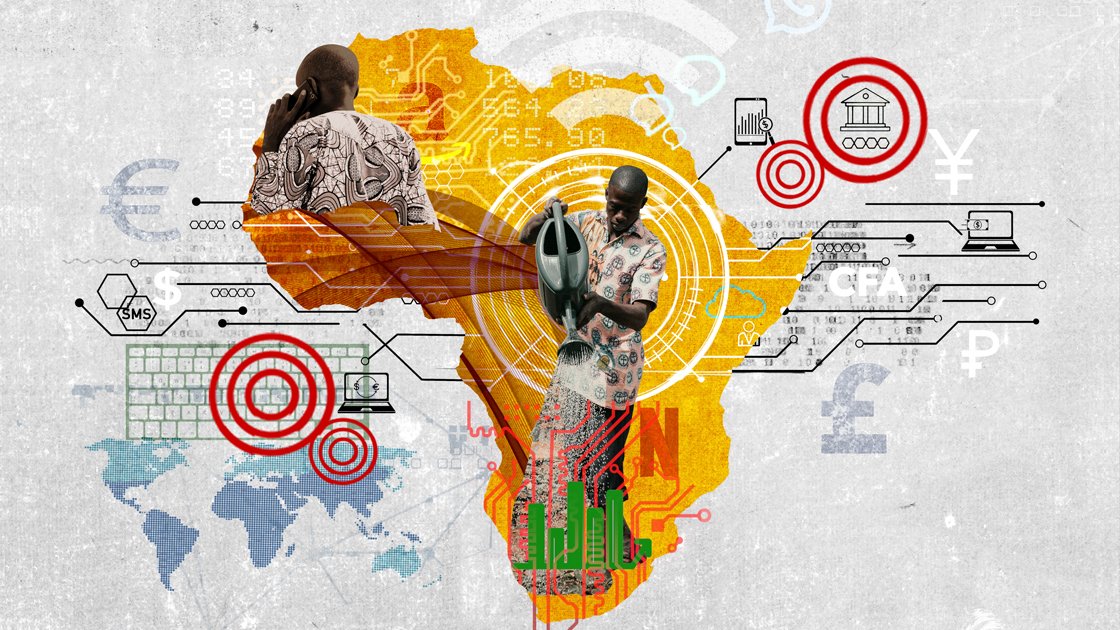
Africa’s fintech story is often told as a triumph of innovation over exclusion. From Kenya’s early mobile money revolution to Nigeria’s booming startup scene, the continent has become a testing ground for digital finance models that global markets now study closely. But as 2026 approaches, fintech in Africa is entering a more complex and consequential phase—one that raises deeper questions about power, infrastructure control, regulation, and who ultimately benefits from this next wave of innovation.
The conversation is shifting from growth to governance, from apps to rails, and from financial access to financial influence.
From promise to performance—and concentration
Over the past decade, fintech across Africa has moved decisively from experimentation to execution. Mobile money proved that financial inclusion could scale without traditional banks. Today, digital wallets, instant loans, and cross-border payment platforms are no longer novelties; they are core to daily economic life.
Yet beneath the success stories lies a quieter transformation: market concentration. As weaker fintechs struggle with funding pressures and regulatory costs, stronger players are positioning themselves as infrastructure providers rather than consumer-facing brands. This shift is subtle but profound.
The fintechs of 2026 may not be the ones consumers recognize—but the ones silently powering transactions across ride-hailing apps, agri-platforms, e-commerce sites, logistics networks, and utilities.

Embedded finance: Convenience or quiet control?
One of the most significant trends shaping Africa’s fintech future is embedded finance—the integration of payments, credit, and insurance directly into non-financial platforms. In theory, this promises convenience and inclusion. A farmer can access credit while buying inputs. A driver can receive instant payouts and insurance from a transport app. A trader can accept cross-border payments without opening a foreign bank account.
But embedded finance also shifts power.
When financial services disappear into platforms, consumers may no longer know who sets prices, manages risk, or controls data. Credit decisions are made invisibly. Fees are bundled. Accountability becomes blurred between the platform, the fintech provider, and the underlying bank.
For regulators across Africa, including Kenya’s Central Bank, this creates a growing challenge: how do you supervise financial activity that no longer looks like finance?
The race to own Africa’s payment rails
Perhaps the most strategic battle unfolding is over payment infrastructure. Africa’s fragmented currencies and settlement systems have long constrained regional trade. Initiatives like the Pan-African Payment and Settlement System (PAPSS) and AfCFTA frameworks aim to change that, but private fintechs are moving even faster.
Cross-border payment platforms now promise near-instant currency conversion and settlement across African markets. For SMEs, this is transformative. A Kenyan seller can receive payments from Uganda or Tanzania without relying on the US dollar. Trade becomes faster, cheaper, and more local.
Yet this efficiency comes with strategic implications. Whoever controls these rails controls fees, data flows, compliance standards, and—ultimately—economic leverage. As consolidation accelerates, Africa may end up with a handful of dominant payment backbones connecting dozens of countries.
The question for policymakers is whether these rails remain open and interoperable—or become privately gated toll roads.
AI, alternative data, and the new credit frontier
Credit remains fintech’s most profitable—and risky—frontier. With limited formal credit histories, African fintechs increasingly rely on alternative data: phone usage, transaction patterns, location data, and even behavioural signals. Artificial intelligence makes this possible at scale.
In theory, this expands access. In practice, it introduces new concerns about transparency, bias, and consent. Borrowers often do not know how they are scored, why they are rejected, or how to appeal automated decisions.
As AI models become more sophisticated, regulators face a delicate balance: encouraging innovation while ensuring that digital credit does not become opaque, discriminatory, or predatory. Kenya’s experience with digital lending over the past decade shows how quickly innovation can outpace consumer protection.
Profitability over growth: a quieter reset
The fintech boom years were defined by user growth and transaction volume. That era is ending. Investors are now demanding profitability, regulatory compliance, and sustainable unit economics. This reset will likely thin the field.
Some fintechs will become banks in all but name. Others will retreat into infrastructure roles. Partnerships with traditional banks—once seen as slow and outdated—are becoming strategically valuable again.
For consumers, this may mean fewer flashy apps, but more stable services. For startups, it raises the bar significantly. Innovation alone will no longer be enough.

Regulation: the deciding factor
Africa’s fintech future will be shaped as much by regulation as by technology. Countries are moving at different speeds, creating a patchwork of rules around licensing, data protection, KYC, AML, and digital assets.
Without harmonisation, cross-border fintech ambitions risk being slowed by compliance friction. With too much rigidity, innovation may migrate elsewhere. The next two years will test whether regulators and innovators can co-evolve rather than collide.
What 2026 will reveal
By 2026, Africa’s fintech ecosystem will reveal which models endure. The winners will likely be those that build quietly, collaborate widely, and respect both markets and regulators. The losers may be those that scale too fast without trust, transparency, or resilience.
Fintech in Africa is no longer just about access. It is about architecture. And architecture, once built, shapes power for decades.