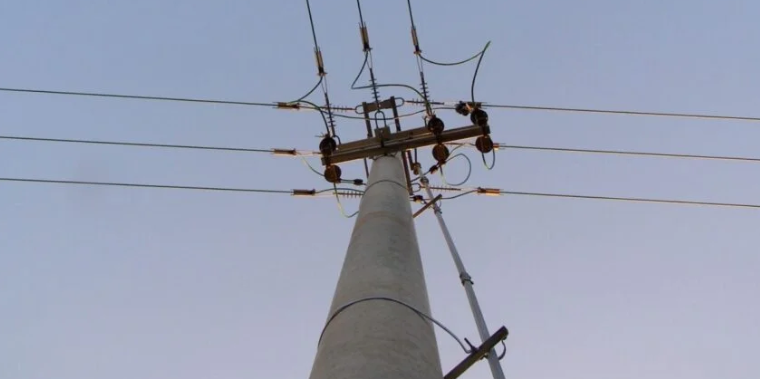
The energization of the Sondu–Ndhiwa–Homa Bay–Awendo 132kV transmission line may have happened quietly at 4:07pm on Wednesday, but its implications for South Nyanza and parts of the South Rift are significant. Kenya Electricity Transmission Company (KETRACO) completed the switch-on after joint construction and commissioning tests with Kenya Power, formally integrating the new line into the national grid. For a region long associated with power constraints and rotational outages, the development marks a turning point. It represents years of planning aimed at reinforcing one of the grid’s most fragile corridors.
Kenya Power has welcomed the move, saying the new line provides a stronger and more direct supply route. The utility notes that the project eases pressure on previously constrained sections of the transmission network. More importantly, it signals a shift from temporary load management toward structural grid strengthening.

Relieving a strained network
Before the new line was energized, South Nyanza relied heavily on the Muhoroni–Chemosit transmission section. That corridor had become increasingly overloaded as demand grew without matching transmission upgrades. The result was frequent voltage instability and planned power interruptions during peak hours.
With the new line in service, Ndhiwa now receives electricity directly from the Sondu generation plant. This reconfiguration reduces dependence on the overstretched Muhoroni–Chemosit section. Kenya Power says the change has already stabilized supply across the wider South Nyanza region.
First peak hours without load management
One of the most immediate outcomes has been the absence of load management during peak hours. Kenya Power confirmed that, for the first time in recent periods, the region passed peak demand without resorting to rotational power cuts. This is a notable milestone in an area where outages have often been treated as routine.
Previously, customers in South Nyanza and parts of the South Rift were subjected to scheduled blackouts driven not by lack of generation, but by transmission bottlenecks. The new line addresses that structural weakness. It highlights how transmission, rather than generation, has been the limiting factor in regional power reliability.

Grid reinforcement, not just expansion
Kenya Power Managing Director and CEO Dr (Eng) Joseph Siror described the project as a major reinforcement of the Nyanza and Western grid. His remarks point to a broader shift in grid planning priorities. Rather than focusing solely on expanding generation capacity, sector agencies are increasingly addressing the bottlenecks that prevent power from reaching consumers reliably.
According to Kenya Power, the new line strengthens the supply path, improves voltage stability, and enhances overall customer experience. These technical gains translate directly into fewer disruptions for households, businesses, and public services. In regions dependent on agriculture, healthcare facilities, and small enterprises, reliable electricity has multiplier effects.
KETRACO’s role under scrutiny
The project also places renewed attention on KETRACO’s mandate. As the state-owned transmission company, KETRACO is responsible for building and maintaining high-voltage lines that connect generation to distribution networks. Delays in transmission projects have previously drawn criticism, especially where completed power plants could not evacuate electricity efficiently.
In this case, the successful commissioning suggests closer coordination between KETRACO and Kenya Power. Joint testing and integration indicate lessons learned from past projects where handovers were slower or less synchronized. The Sondu–Ndhiwa–Homa Bay–Awendo line could serve as a model for future grid reinforcements.

Regional economic implications
Beyond technical stability, the new transmission line has economic implications for South Nyanza and the South Rift. Reliable electricity is a prerequisite for industrial activity, cold storage, irrigation systems, and digital services. Chronic outages have historically discouraged investment in parts of the region.
By stabilizing supply, the line lowers operational risk for businesses and public institutions. It also reduces the hidden costs associated with diesel generators and equipment damage from voltage fluctuations. Over time, these gains could improve the region’s competitiveness relative to better-served urban centers.
Remaining vulnerabilities
Despite the progress, the energisation does not eliminate all risks. Transmission lines require continuous maintenance, and growing demand could once again strain capacity if upgrades do not keep pace. Kenya Power has not disclosed the full load margin now available, leaving open questions about how long the current stability can be sustained.
There is also the broader issue of distribution infrastructure. Even with strong transmission, local distribution networks must be upgraded to fully deliver the benefits to end users. Without parallel investment, some customers may still experience outages unrelated to the high-voltage grid.
Signals for the power sector
Kenya Power has reaffirmed its commitment to working with sector agencies, including KETRACO, to strengthen the national grid. The statement reflects a recognition that reliability depends on coordination across the power value chain. Generation, transmission, and distribution must move in step.
For South Nyanza, the switch-on of the 132kV line is more than a technical event. It is a signal that long-standing grid weaknesses can be addressed through targeted infrastructure investment. Whether this momentum continues will determine if the region finally escapes its history of power instability.